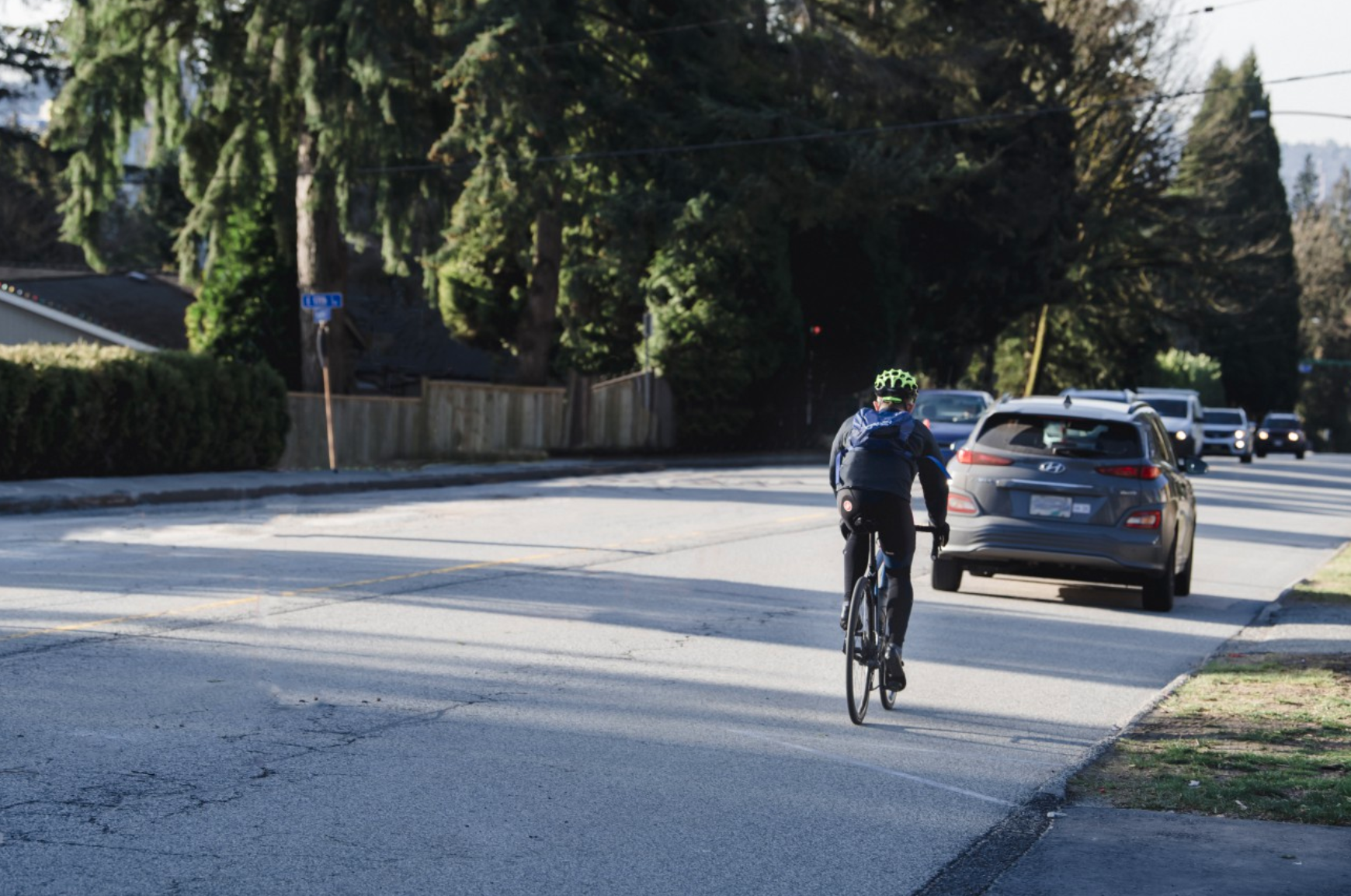
The District of North Vancouver Council is set to review proposed design elements for improvements to the southern segment of Mountain Highway at an upcoming workshop on March 30, with staff seeking direction to proceed with detailed design of the corridor near the Highway 1 interchange.

Widen the corridor from three lanes to four
The core of the proposal is to widen the corridor from three lanes to four — two northbound and two southbound — between Highway 1 and Arborlynn Drive. Staff report noted that the segment currently carries nearly 2,000 vehicles during the peak hour, and that evening congestion regularly disrupts local travel between the Lynn Valley and Lynn Creek town centres.
North of Arborlynn Drive, the design calls for reconfiguring approximately 100 metres of roadway to provide two southbound lanes and one northbound lane. This transition point is intended to allow sufficient space for vehicles to pass stopped buses without causing traffic to queue back into nearby intersections.
The proposal also includes restricting left turns onto Arborlynn Drive from southbound traffic. Staff also proposes retaining the northbound slip lane from Mountain Highway onto Arborlynn Drive.
Active transportation gap to be addressed
The fifth design element involves constructing multi-use pathways between Highway 1 and Arborlynn Drive. Staff noted that the Ministry of Transportation and Transit previously completed multi-use pathway connections along the Highway 1 corridor as part of the Lower Lynn Improvement Project, but that a gap remains on Mountain Highway between that work and the Arborlynn Drive intersection.
The new pathways will close this gap and complete a key link in the District’s active transportation network.
The estimated cost for the southern segment improvements ranges from $2.5 million to $3 million, subject to detailed design. According to the staff report, the project is eligible for cost sharing through TransLink’s Bicycle Infrastructure Capital Cost Share program, with a potential contribution of up to $1.5 million. Staff will bring forward a funding strategy as part of the 2027–2031 Financial Plan for council’s consideration.
Construction is targeted for summer 2027 or 2028, subject to detailed design, third-party permitting, and approval from the Ministry of Transportation and Transit. Staff noted that Ministry approval is required, given the project’s proximity to Highway 1 infrastructure, and that all construction must be complete by the end of 2028 to meet TransLink’s external funding deadlines.