




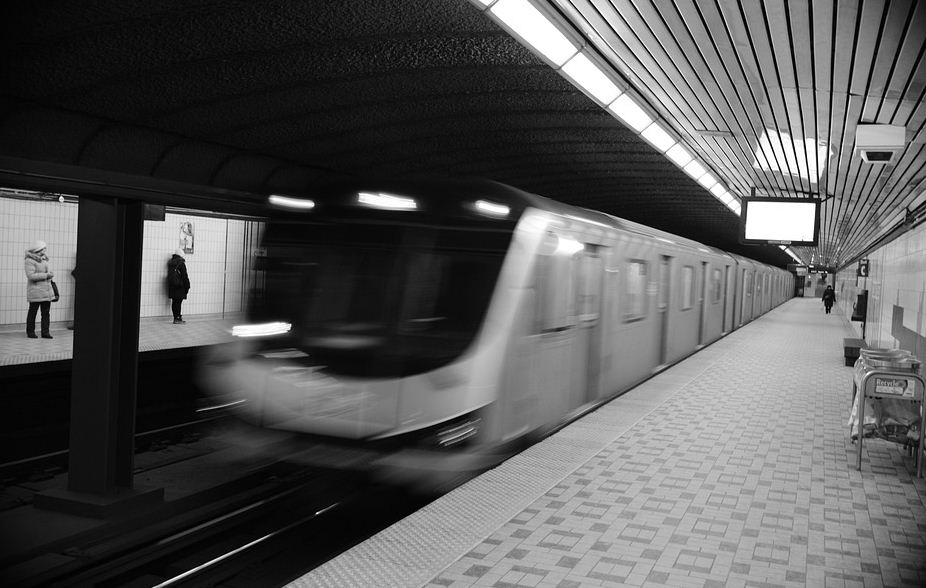
A report released today by the Toronto Public Health department recognises issues exist regarding air quality in the city’s subway system, including PM 2.5 contamination.
“The fact that the Toronto Public Health department is recommending short, as well as mid and long-term mitigation measures indicates there are obvious risks,” said Carlos Santos, President of the Amalgamated Transit Union Local 113, which represents more than 12,000 Toronto Transit Commission workers.
These concerns are shared by CUPE Local 2, which represents hundreds of additional TTC employees. In late 2019, charges were laid against the TTC under the Environmental Protection Act related to PM 2.5 contamination.
“This new report confirms the problems regarding air quality contamination in the subway system are clearly legitimate,” said Santos.
Toronto Public Health has also confirmed in discussions earlier today that the report does not address exposures to people working in subway areas, including employees and others in the many shops and services.
“If the conditions in the subway require many kinds of mitigation for passengers, any reasonable person has to be deeply concerned about what this means for anyone who works there for their living. It is extremely disturbing that Toronto Public Health wasn’t directed to look at this issue, knowing that the risks are obviously far greater for employees,” said Santos.
Toronto Public Health has further indicated the report does not apply to anyone who may have an existing medical condition, instead recommending they speak to a healthcare professional.
“When the city’s own health department recommends that passengers seek independent medical advice before using our city’s transit system, there is a major problem that needs to be addressed immediately,” said Santos.
Toronto Public Health said in a release today that levels of PM2.5 in Toronto’s subway system warranted mitigation because reductions would have health benefits for passengers.
“The abbreviation PM2.5 refers to particles in the air that are less than 2.5 microns in diameter. These particles are about 20 to 30 times smaller than a human hair. Toronto Public Health is recommending that the TTC implement measures to reduce exposure to PM2.5 levels in the subway system. This could include employee training, reviewing TTC operations to identify where PM2.5 exposure can potentially be reduced and ongoing air quality monitoring,” it said.