






At a council meeting today, the District of North Vancouver Council will decide on giving first reading to two bylaws that would rezone approximately 19,000 single-family properties under a pair of new designations — R1 and R2 — and send the matter to a public hearing.
The vote will mark the first major phase of the municipality’s Zoning Bylaw Rewrite, the first comprehensive overhaul in over 60 years.

According to the report, the new R1 zone, called Rural and Suburban Detached Residential, would apply to 219 properties outside the Urban Containment Boundary, permitting a house and a secondary suite. The R2 zone, Urban Detached Residential, would cover 19,693 properties within the boundary, allowing a house, a secondary suite, and a coach house.
If the council approves the first reading on Monday, a public hearing would follow in June, with adoption targeted for July.
Sign up for news alerts from the North Shore Daily Post
Fully in-ground basements would be banned, with partial basements permitted up to four feet below grade on the downhill side of a slope. According to the report, below-grade suites frequently lack daylight and adequate emergency egress, and deep excavations disrupt groundwater flow, threaten tree retention, and require large amounts of carbon-intensive concrete.
Garages would lose their existing floor space exemption, freeing homeowners to officially convert garage space to living space without penalty under floor space ratio calculations, provided adequate driveway parking remains. Building heights would rise to a maximum of three storeys — 33 feet for flat roofs, 38 feet for pitched — and front yard setbacks would shrink from 25 feet to 20 feet.

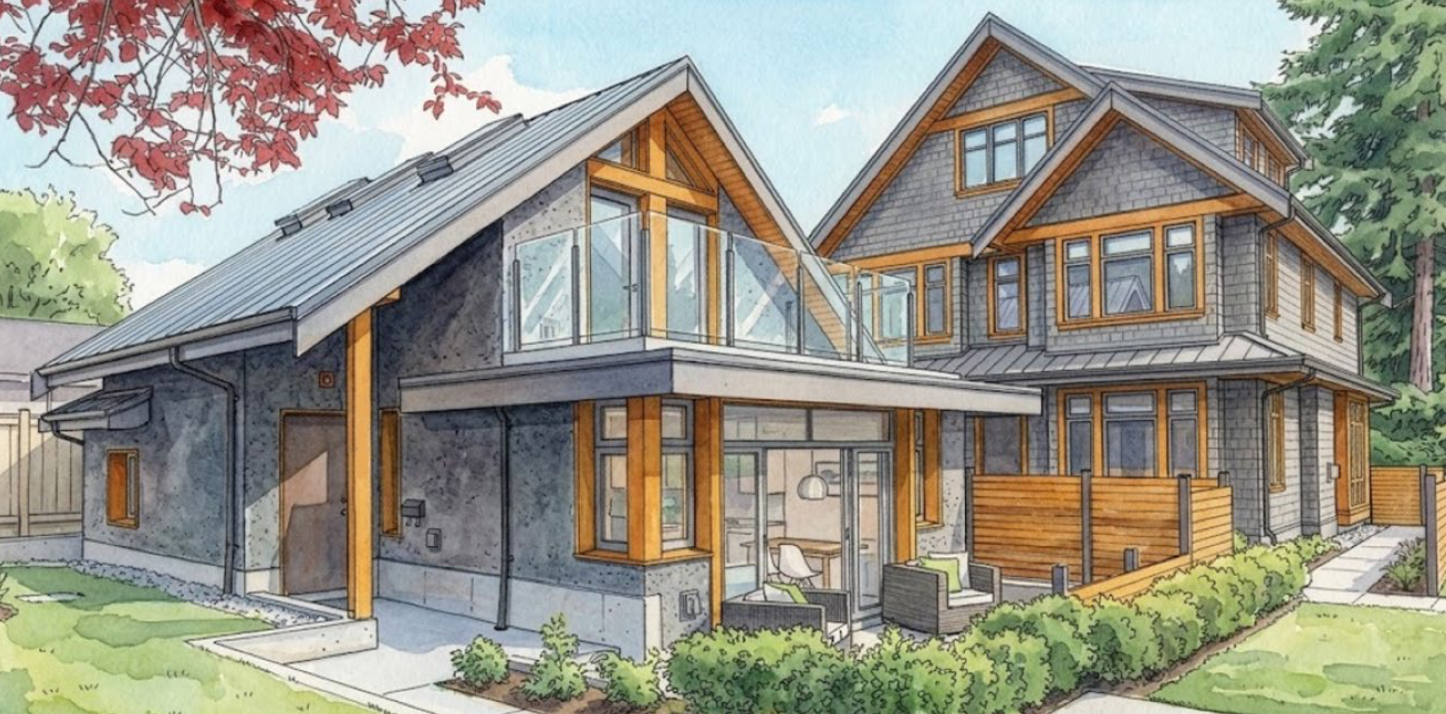
Coach house rules would also be loosened within the Urban Containment Boundary. The maximum permitted size would grow from 968 square feet to 1,400 square feet, with an additional 500 square feet of floor area granted on lots that include one. A new landscape area requirement would ensure that portions of each lot are reserved for green space, supporting the District’s biodiversity and stormwater goals.
One point of contention heading into Monday’s meeting is whether coach houses should also be permitted outside the Urban Containment Boundary, a possibility raised in a council motion on May 4. Staff will not be recommending it.
According to the report, properties in areas such as Indian Arm lack sanitary sewer connections, have limited access via steep fire lanes, and sit within wildfire, slope, and debris-flow hazard areas. Permitting coach houses there, staff argue, would also conflict with multiple Official Community Plan policies designed to contain development intensification inside the boundary.
Council will choose from three options: approve first reading and refer both bylaws to a public hearing, approve first reading while amending the R1 zone to allow coach houses outside the boundary, proceed directly to second reading, or send the bylaws back to staff for further work.