







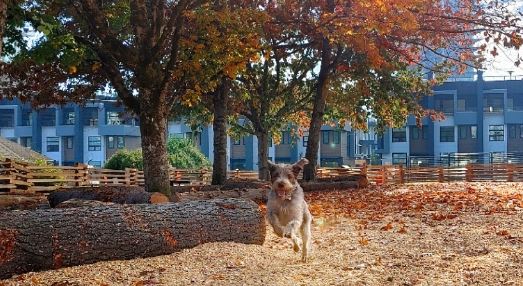
The District of North Vancouver has released a draft People, Dogs and Parks Strategic Plan, outlining a 10-year roadmap to better manage the shared use of local parks and trails by people and their pets.
The plan aims to balance recreation, environmental protection, and community needs as dog ownership and park use continue to grow. The District said that with an estimated one dog for every five residents, it must adapt its policies to ensure parks remain safe and clean.

According to the draft plan, “District parks offer opportunities to connect with nature and promote well-being for everyone, non-dog owners and dog owners alike.”
The document sets out guiding principles around wellness, environment, and community, supported by six strategic directions. High-priority steps to be implemented in the first three years include adding new fenced off-leash areas, improving dog waste management, and reviewing key bylaws related to dog use and commercial dog walking.
Among other top short-term actions are plans to assess existing dog parks for upgrades and secure funding for maintenance and improvements. The District will also investigate alternative dog waste collection systems and strengthen public education on responsible pet ownership.
The plan also calls for identifying sensitive areas affected by dogs and introducing measures to limit impacts, such as fencing, signage, and leash-only zones near creeks or salmon habitat. It also proposes reviewing water access points to ensure safety for dogs while protecting aquatic life.
The District intends to work more closely with partner organizations, including the North Shore Mountain Bike Association, to reduce conflicts on shared trails. Regular meetings with the District of West Vancouver are also recommended to align dog-walking regulations across municipal boundaries.

The plan proposes standardizing all dog-related signage, launching temporary awareness campaigns, and offering dog behaviour training for park staff.
Other suggestions include developing a “Bark Ranger” volunteer program and exploring participation in the Yellow Bandana initiative, which helps identify reactive dogs needing extra space.
Metrics for success will track public perceptions of dog-related issues such as waste, environmental impacts, and user conflicts. The District said it aims to reduce concerns among park users by up to 10 percent over the next three years through improved management and communication.
Public feedback will continue to shape the final version of the People, Dogs and Parks Strategic Plan before it is presented to Council for adoption.
The District said the plan will guide decisions to ensure its parks remain “safe, inclusive, and enjoyable for all.”




Which given DNV is still soliciting public input on the issues generally not just on their draft report makes one wonder if their “public consultation” or if their minds are already made up. Because if you read the report in full while the survey asks questions about dogs on trails the report is entirely about dog parks.